

AI in the property sector: Why caution is rarely the same as rejection – and what decision-makers really need
We hear it time and again in conversations with estate agents: the benefits of AI tools are not yet being recognised. At first glance, this sounds like resistance or scepticism towards new technology. However, our experience paints a different picture – and that is important, because the right diagnosis determines which measures will actually help.
What appears to be a defensive stance is, in the vast majority of cases, something else entirely: ignorance and uncertainty. And given the speed at which AI is currently developing, that is hardly surprising.
Where this pattern can be seen
We see this particularly clearly among decision-makers – but by no means only there. We encounter the same pattern in IT departments, in compliance functions and in legal departments too. It is precisely those departments that should actually be setting the guidelines for the use of AI that often find it hardest to adopt a clear stance.
This is no coincidence. These roles carry a particular responsibility when they give the go-ahead – and that is precisely why the uncertainty weighs so heavily here.
Why this is understandable
AI tools are currently evolving at a pace that is almost impossible to keep up with, even for those whose job it is to work on them full-time. What was considered state-of-the-art just a year ago is now outdated. Making an informed decision in this situation – for a company, a department or an entire workforce – is a real challenge; it is not simply a matter of good or bad will.
The result: no decisions, or only tentative ones
Without proper knowledge, insight and understanding of the technology, it is impossible to make sensible decisions – or, at best, only very tentative ones. The result is often stagnation: people wait and see, postpone the decision, and perhaps set up a working group to familiarise themselves with the subject first. In the meantime, something else often happens that is at least as relevant: employees have long since started using AI tools themselves, privately and without supervision, whilst those at the top are still debating the fundamental issues.
This is no minor matter from a regulatory perspective either. Article 4 of the EU AI Act requires companies that use AI to demonstrate verifiable AI expertise – not only amongst users, but particularly at decision-making level. Any manager, IT manager or compliance officer who is expected to make decisions on the use of AI without a sound understanding of the technology can hardly fulfil this responsibility in a responsible manner.
What really helps
The obvious solution to uncertainty is rarely a lengthy technical training course – and even less often an order from above without any explanation. What really works is a shared understanding: decision-makers and users in the same room, with the same examples, the same open questions and the same honest answers about the technology’s possibilities and limitations.
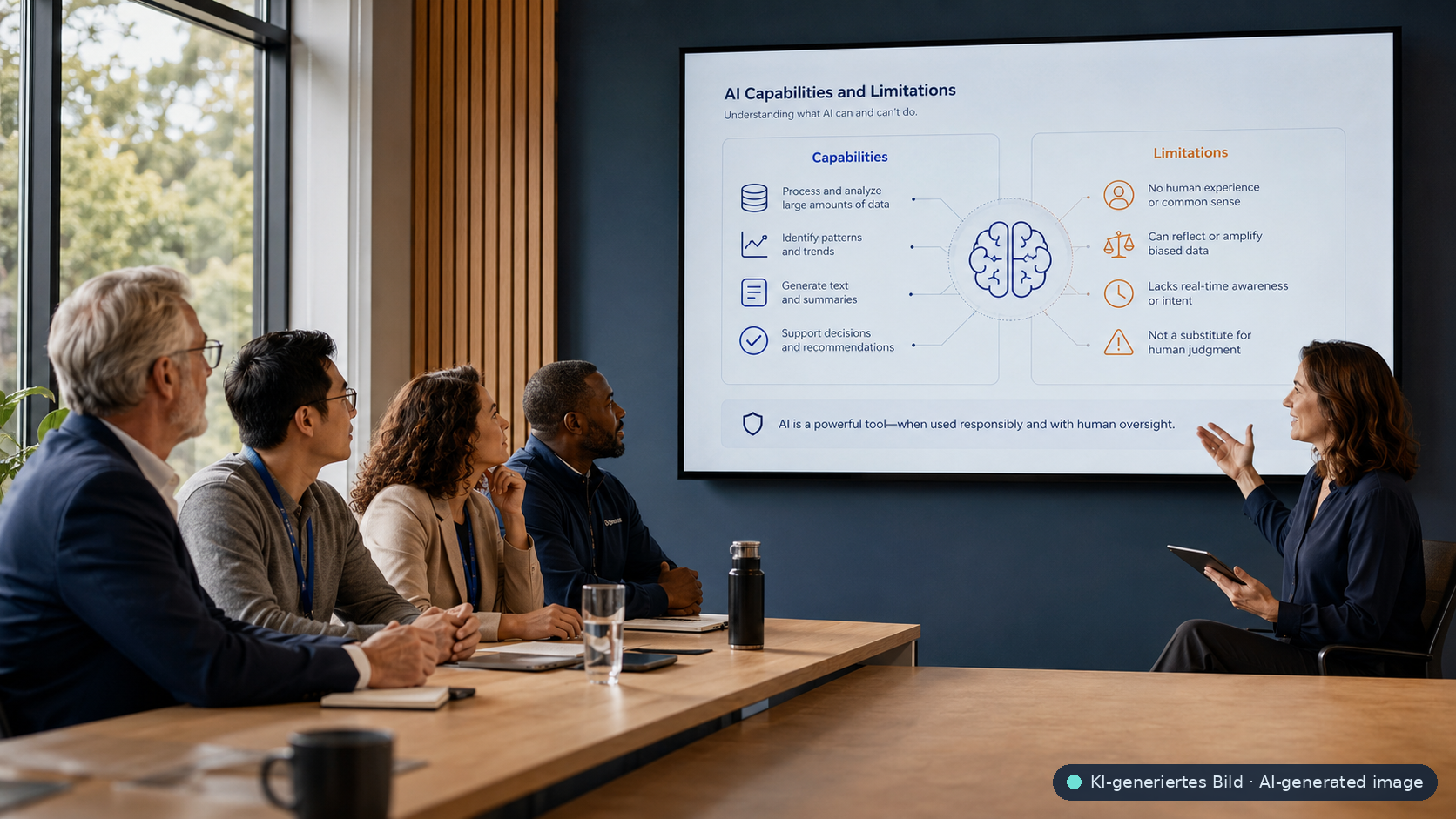
This is precisely the experience we have had with our inspiration and leadership workshops. There, decision-makers, together with end-users, gain a practical insight into what AI tools are actually capable of today – and an equally honest understanding of what they are not (yet) capable of. Using concrete examples from everyday working life, a shared understanding emerges that enables confident rather than tentative decisions.
The format thrives on the fact that knowledge is not imposed from the top down, but is developed collaboratively. When IT, compliance, the legal department and operational teams share the same foundation, uncertainty does not disappear overnight – but it transforms into specific, answerable questions rather than vague hesitation.
The next step
Arrange a no-obligation initial consultation: we’ll show you what an inspiration and leadership workshop for your organisation might look like – and how you can bring decision-makers, IT, compliance and end-users up to the same level of understanding.


